
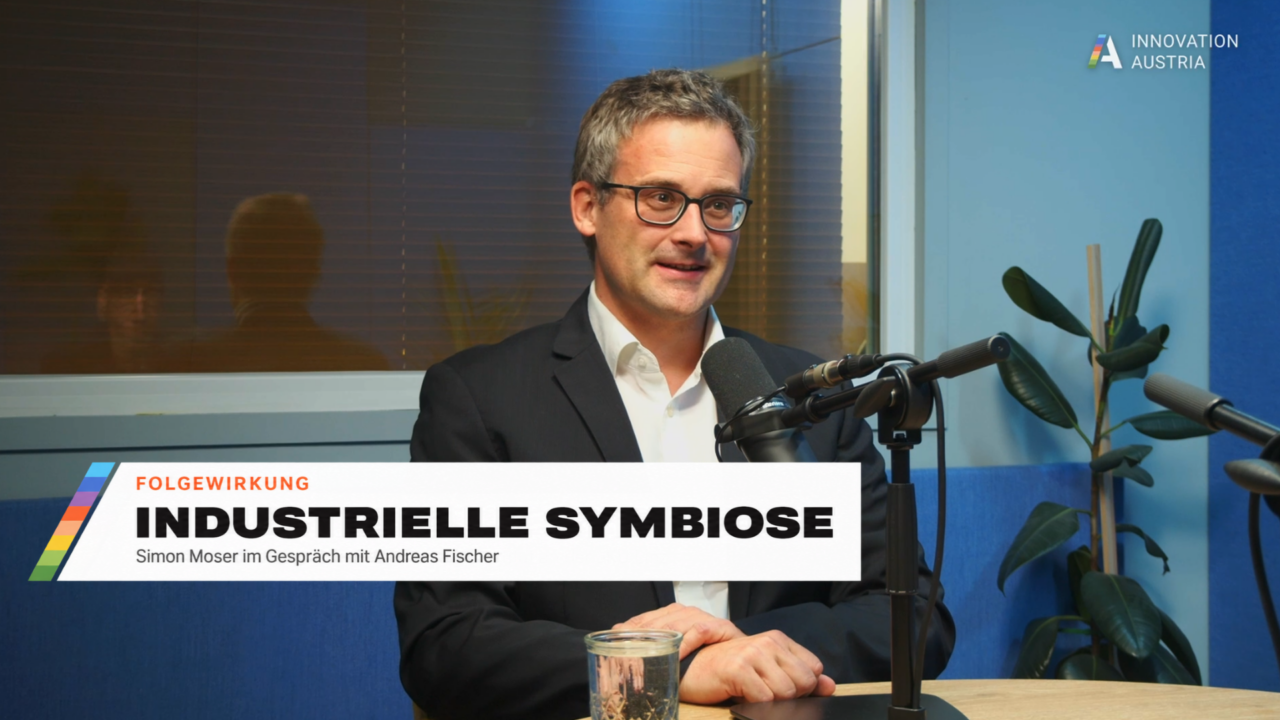
In nature, plants and animals benefit from one another. Industrial symbiosis applies this principle to the economy: businesses operating side by side share electricity, heat, raw materials or equipment. After all, what is regarded as waste in one company may become a sought-after resource in another. This saves energy and costs and reduces emissions.
Technically, this has long been possible, yet this symbiotic sharing happens very rarely. Why? This is primarily down to people: most businesses have little idea what their neighbours produce. Those who collaborate must disclose data, rely on a partner and take risks. This means that, in this context, sharing suddenly becomes a matter of trust. Many existing collaborations in Austria have come about because the parties involved knew each other personally. The question now, of course, is: what is needed for this principle to become the norm?
Guest: Simon Moser, economist and key researcher at the Energy Institute at Johannes Kepler University Linz
Host: Andreas Fischer / Folgewirkung Podcast
Further links:
- Simon Moser at the Energy Institute at JKU Linz: https://energieinstitut-linz.at/en/team/simon-moser/
- Heat Highway research project (supra-regional heat networks for industrial waste heat): https://energieinstitut-linz.at/en/project/interregional-heat-transmission-networks-to-enable-industrial-waste-heat/
- Follow-up project ‘Future Heat Highway’: https://energieinstitut-linz.at/en/future-heat-highway-project-launching-the-next-phase-of-a-sustainable-heating-system/
- Study: ‘Using Industrial Waste Heat in District Heating: Insights on Effective Project Initiation and Business Models’ (Energy Institute at JKU Linz, 2023): https://zenodo.org/records/14056219
- You can find all further information about the podcast here: www.folgewirkung.at